Showing posts with label Environmental Education. Show all posts

2/27/2012

Pueblo Mountain Park...upine?

Saturdays outing with the Pueblo Youth Naturally group was a lot of fun! Rangers Sandy and Pine joined these kids after they had been sledding and exploring for the morning and went over some basics of animal sign tracking. Some of the kids had been students in Earth Studies and remembered some of the material from their lessons in prior years.

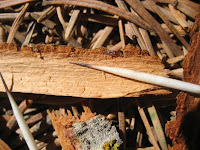
An amazing experience occurred when tracking along South Creek near the southern boundary of the park. A gnarly windfall in some deep snow forced us to ascend the creek bank and into a fairly open stretch of ponderosa pine ecosystem. Suddenly we came upon an uncommon phenomenon, a White Fir with the bark stripped from nearly every limb.


The bark stripped from the branches lay in a very noticeable layer of small (3” x ¾”) strips around the base of the tree from trunk to drip-line.

I wasn’t sure what animal had done this damage to the tree, but I assumed it was stripping the outer bark to get to the sugary carbohydrate-rich inner bark. When I consulted Ranger sandy Christensen about this animal sign she felt that it was a sign of porcupine, an animal we often do not think of as inhabiting the Mountain Park. A bit of research confirmed Ranger Sandy’s suspicion and closer examination of the bark-strip laden area beneath the tree turned up some unmistakable porcupine scat and quills!


2/13/2012

Earth Studies Session 4: Mammals & Tracking Comes to an end.


The Earth Studies session on Mammals & Tracking has just come to an end. We had many great days of tracking with all the fresh snow. A few warm afternoons allowed some muddy conditions for wildlife to impress their prints into which we often found frozen the next day . . . perfect for showing the details of wildlife identification through the use of track analysis!

Several areas where the snow we had about a month ago melted down kids were able to identify areas where deer had bedded down. When we examined these closely we even found some deer hair to identify and match up with the hides we have as teaching tools in the classroom. We also ran across a very interesting site where something had been killed and eaten. Although there were no bones or flesh left behind, we did find frozen blood, entrails and a lot of hair. From the hair and remains we think it may have been a raccoon, perhaps eaten by a bobcat or other predator. There were many days when these kids exclaimed that it had been the best time out to the park yet!

12/04/2011

Winter Wonderland Classroom


The Mountain Park has been receiving a lot of snow lately and the kids absolutely love it. Although there are a few days where the schools will opt out of participating in the days session due to weather conditions, most schools and classes do not stop when we get a good snow.

If the snow is deep enough the students don snow-boots and it's class as usual . . . although it's quite a different day from one spent indoors sitting at a desk. These students hike through out the snowy forests and get all of their days worth of educational standards by using the various aspects of nature as teaching opportunities.

One of the focuses for this month is the biology and identification of the trees in the Mountain Park. There are six prominent types of coniferous trees in the park, two Junipers, two Pines and two Fir. Although there are many differences between the different trees, the students are taught to focus on a few easy to discern traits such as the type of leaf (needles or scales) and their arrangement.

For example, the Douglas Fir [left] has very green needles that grow from the branch in all directions (like the spokes on Douglas' bicycle wheel!) . .

while the White Fir [right] has slightly bluish-green needles which are almost twice as long and typically grow from the sides of the branch and curve upwards.

It's also a great opportunity to begin to prepare them for next sessions focus which is on Mammals and Tracking by pointing out the occasional signs and quite frequent tracks of the various animals which make the Mountain Park their habitat.

Often we find the tracks of mule deer and fox and at times we have even come across tracks of wild cats such as the bobcat that we saw and got photographs and even a little video of last year. Of course various animal scat, especially from the many deer that visit the park, is quite prevalent and provides not only some frequent laughter from the students but also a lot of opportunities to segue into many on-topic conversations.

We also find signs of squirrel activity; the ponderosa branch tips on the ground around the drip-line of the trees, some of which have been stripped of their needles and bark due to the squirrels eating the sugary inner bark.

~Ranger David "Pine" Martin
Environmental Educator
Mountain Park Environmental Center

11/29/2011

A warm Day of Rocks and Soils and Mysterious Tracks!

The rescheduled school for yesterdays Earth Studies session was very lucky. An unseasonably warm day greeted us on our arrival to the park and we spent the day learning about Geology and Soil. The recent snow and subsequent melting combined perfectly with this days warm weather allowed us to get a really good sample of the soils in each ecosystem while enjoying the sunshine. It also made for a trail full of animal tracks in the now mostly dried mud of the trails. Stories played out in footprints abounded as the kids deciphered the mysterious language of the trail before them.

The hike into Devil's Canyon was magnificent and the water flowing under the ice was moving in dark and mysterious blob-like forms which completely captured the kids attention and brought up conversation about how it was like the blood stream of our bodies. Their personification of it was a great segue to speak to the importance of water on the planet as well as in such a dry state as Colorado. It was a great day out and the kids had a blast!

11/18/2011

Dichotomous Keys & Trying Not To Freeze


It was a pretty cold week for Earth Studies students, but we managed to find some sunny places to sit and learn about Trees and Wildland Fires. In the tree portion of the day these kids learn how trees grow and the different parts of the trees anatomy as well as learning to identify the various trees in the Mountain Park. They also learn how to age the Ponderosa Pines of the park (without cutting them down and counting the rings).


In the fire portion of the day these students are taught about the Mason Gulch fire which came within 4 -1/2 miles of the Mountain Park. Most students found forest fires to be much larger and more destructive than they had previously imagined them to be.

One thing I noticed this week was that as the children did the Tree I.D. exercise they no longer seemed to notice the cold.

Tree I.D.
combines a scavenger hunt element with the mystery of figuring out which of the six coniferous trees in the park is which. Students use a dichotomous key designed for the trees found in the Mountain Park; by examining the trees closely to answer the series of questions on the key they eventually arrive at the answer.

After doing about nine trees these kids could identify some trees just by looking at them at a relative distance.

This session goes a long way toward educating these kids about how nature works and how to better steward their park and other wild areas of Colorado. Their minds are opened up to new possibilities such as the idea that wildland fires are not good or bad, but just a natural and necessary part of the health of the ecosystems they have been studying.

11/11/2011

Society Is The Soil From Which Our Children Grow

~by Ranger David "Pine" Martin

“A child said What is the grass?
fetching it to me with full hands,
How could I answer the child?”
~Walt Whitman.

I was reminded of these lines from Walt Whitman’s poem Leaves of Grass yesterday when a student asked me a question during our Earth Studies session.

We were sitting in a circle amongst the Ponerosa Pines examining the soil created by that ecosystem; discussing the minerals, water, air and organic matter to be found in the samples each child had taken. We discussed the ways in which the forest of the past contributed a great deal to the rich, nutritive biotic content of the soil from which the forest of the present receives it's nutrients and water from.

A child held up something he had found in his small sample of soil. “What is this?” he asked. It was one of the small, orange, male pine cones.

I explained what it was, but this answer only served to generate more questions. One was, why are the female cones so much bigger than the male cones?” I explained that the female cone is an ovulate cone and has a big job; it must build a home for, create the seeds which carry all the genetic coding for the Pine tree to reproduce, and must house those seeds until they are dispersed which may take several years.

Often I am asked questions by students during Earth Studies programs to which I would love to answer in great depth and illuminate them at length to the amazing and elegant complexity of the living systems of the world around them. I would have loved to go into how wind tunnel analyses of the female cones have shown that the geometry of the cone’s structure itself aerodynamically enhances the probability of pollen entrapment.

A part of me, akin to Whitman, would love to ruminate on each question, take them deep, ponder and mull over the nuances and connections and through this generate a greater sense of meaning within myself and these children, imbue their worldview with a deep beauty. With the day’s time constraints and the short attention span of the Fifth Graders however, it is best to keep the answers brief and as “on-topic” or applicable to the session’s lesson as possible. Bring it back around. Show interconnectedness.

I woke up this morning with some deeper thoughts on this subject. What we do as Environmental Educators is a lot of seed planting; we know that not all seeds will take root, so we plant a lot. It occurred to me however, that not only are we planting seeds, but we are enriching the soil those seeds are planted in and that this, like the relationship between the soil and the trees in this ecosystem, will perpetuate itself. Environmental Educators not only teach the elements of the session at hand, but as adult members of their community and education system, we teach many other things by example. We show them our love of Nature and how to responsibly interact with our environment and each other. Earth Studies Co-Program Director John Duston once told me "We teach values." and I would have to agree with him wholeheartedly. Much of what we teach is through exhibiting our values by our behavior. We teach them that we value nature and value learning by fostering an outdoor classroom culture of cooperation, mutual respect, patience and enthusiasm. As we educate these young people our hopes are that it elevates the level of education, the sense of place and the values of our community and society at large as it grows and matures. Our intention is that each of these kids grows up strong, healthy, intelligent and happy.

Society is the soil from which our children grow; our children will become the society of the future and they will in turn become the soil from which their children grow.

8/11/2011

Lots going on at MPEC!


As we are around the mid-point of the summer, there is no lack of activity in Pueblo Mountain Park. Along with summer flowers like goldenrod, Kansas gayfeather, and golden aster blooming (thanks to some badly needed rain the last part of July and the first week of August) and the end of our busy summer camps last week (we served around 200 campers, ranging from kindergartners through high schoolers), we are now gearing up for the start of our Earth Studies program in a couple of weeks (all 1200+ 5th graders from Pueblo City Schools will come to the park 6 full days over the school year for outdoor-based education). And while several bears continue to be spotted in and around the park, construction on the East Wing of the Horseshoe Lodge is moving along right on schedule. Here are a couple of photos of the dormitories and restrooms, all framed with plumbing going in as I write. I project the East Wing (and the entire Horseshoe Lodge Renovation Project) will be complete around mid-fall!

7/02/2011

June Wonders of Nature Camp


Wonders of Nature Camp got off to a great start this year as we clearly defined the group goals and group ethics and expectations we would be looking to fulfill and create together. Many of the children had great input about their expectations of the fun and discovery they wanted to experience. Some wanted to make new friends, some were all about the games and others were very interested in exploring the natural world of the Pueblo Mountain Park. Although the week went fast, we ended up doing all these things!

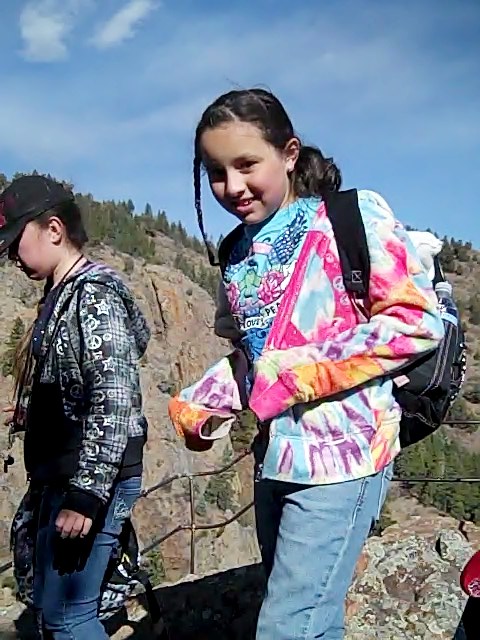
Monday began with a hike up to Lookout Point to see the view of the foothills to the South West as well as to experience the depths of Devils Canyon from above. This was a pretty challenging first hike for some of the little campers, but they did well. This hike up Mace Trail passes through some pretty hot and dry Mountain Shrub Land Ecosystems and so hydration was important and we all encouraged one another to drink plenty of good, clean water. We also kept an eye on each other for signs of heat exhaustion as well as reminding the group to reapply sunscreen. We saw some Claret Cup cactus blooming as well as many other wildflowers along the way, and as usual the bugs and butterflies and hummingbirds were very busy.

Wednesday we focused on the Devils Canyon trail making our way through the shady Douglas Fir Ecosystems. We contrasted this ecosystem with the one we experienced the day before and discussed the differences in the flora and fauna of each.

We took our time to take in the details and this led to many interesting discoveries. Right off the bat we began to notice different vegetation and spotted some large fungi growing on old dead logs. The treasure here was the friendly blue and purple (with black-polka-dots!) Pleasing Fungus Beetles.

These beetles can often be found on the large fungus, slowly burrowing into them as they slowly devour these tough mushrooms over several years.

They also fly around a lot and have a proclivity for landing on our shirts and hats and crawling around peacefully. Some of the kids did not relish this experience, while others fell in love with these amiable beetles immediately. These beetles were an introduction to the insect world of the Mountain Park and several of the boys took to searching out different kinds of insects with gusto for the rest of the week.

There are so many different kinds of insects in various stages of development at this time of year that there was no end to the entomological discoveries.

It was a delight to see the kids take an interest in the tiny folk of the forest for in my opinion they are often overlooked and underrated, not only in their amazing diversity or elegant beauty, but in the work they do in the natural community.

One boy in particular seemed as though he had found his purpose in life by discovering the amazing diversity of insects this Summer and it wouldn’t surprise me to see this young man grow up to be an amazing naturalist and entomologist with a great knowledge of local insects. I encouraged them during our journaling time to write or make illustrations about these discoveries. There was a lot of interesting science to talk about such as the insects’ different adaptations, metamorphosis and the unique ways some of them camouflage themselves to blend in with their habitat.


3/26/2011

Spring Break Camp

Spring Break Camp was a wonderful experience this year with mostly sunny and warm weather blessing the Mountain Park and making for an excellent environment for hiking and games.

Campers were introduced to several new games, some of them seasonal in nature to welcome Spring and the birds returning from their Winter migration.
We built large pine-needle nests, played many games and variations of Hide-and-Seek, saw Flickers and Woodpeckers and Nuthatches and even a Coopers Hawk!

The creek was calling and several of the campers decided to don rubber boots or change into flip-flops and actually got their feet wet.

The forest echoed with laughter and howls of delight at the icy water.

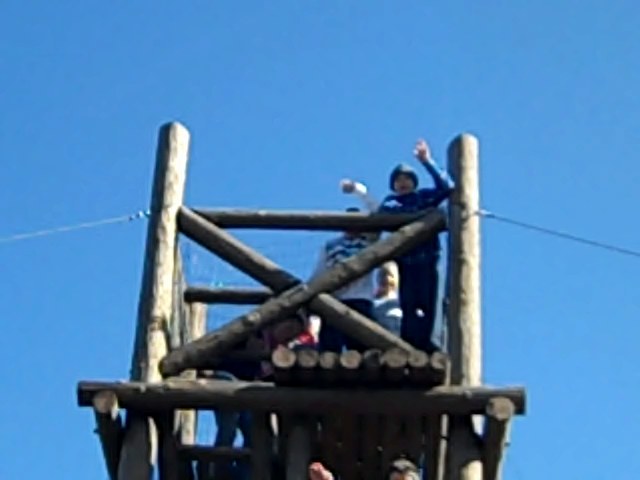
A hike up to the Fire Tower was a high point providing the campers with the opportunity to climb up into the sturdy historic Fire Tower.

This tower was once used to keep an eye on the surrounding forests during fire season.

Climbing up the tower gives one a view of the entire Beulah Valley . . . and beyond!

A longer hike on Thursday up to Lookout Point and North Ridge Trail was a good challenge.
Campers expressed feelings of accomplishment at the trek they had completed through some of the Mountain Parks most beautiful and wild areas.

If this is any indication of the fun and adventure in store for camps this year then I am REALLY looking forward to the Summer Camps!


11/08/2010

CO Trail Fund-Raising Dinner Program a real hit!


This past Saturday evening, around 100 folks showed up at MPEC for some great food and Ranger Dave's musical slide program on his progress on the Colorado Trail Backpack for Nature Education. Several delicious soups, salad with MPEC's special home-made dressing, breads and deserts started off an upbeat evening at MPEC. Then Dave told the story in pictures and live music of his 267 miles along the trail this summer. Check out the hike blog at http://www.rangerdavehikes.blogspot.com/ for more details on the Colorado Trail Fund-Raising Hike. Here are some photos from Saturday's program (staff and volunteers in the kitchen; cooks extraordinaire Mary Porter and Bernie Abrahams with some of the homemade breads; warming up the crowd before the program; MPEC's happy members Barbara Blake and Michael Wenzl).

9/30/2010

A couple of budding pond ecologists!


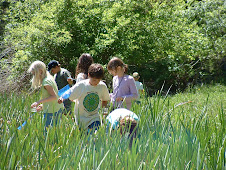
A couple of weeks ago, the Palmer Land Trust sent a film crew (Cloud Foundation) to capture some of what MPEC does to present at the awards dinner last evening (and as soon as I can figure out how - or get someone to do it, we will post the clip here and/or at the MPEC website). The production assistant Makendra Silverman took a bunch of photos of a group of students immersed in pond study. As I looked through the photos, I was just delighted with this sequence of photos of a couple of students that do a wonderful job of capturing the enthusiasm of these 5th graders. This is what MPEC is all about, and I am thrilled to see that these programs that I started over a decade ago are still going strong in facilitating the Nature/child connection! ~Ranger Dave

MPEC receives Stewardship Award!


Last evening, MPEC had the honor of being in the company of some terrific individuals and organizations in receiving a Conservation Award from the Palmer Land Trust. At a delightful presentation event held in Colorado Springs, MPEC was presented with the Stewardship Award "in recognition of exceptional environmental stewardship" for our Nature-based education programs and ecologically aware management of Pueblo Mountain Park. Other award recipients were Reeves and Betsy Brown of the the 3R Ranch in Beulah, Judy Sellers of Colorado Springs, and the Cheyenne Mountain Zoo, also of Colorado Springs. We are pleased that so many MPEC members, employees, board members, volunteers and supporters attended the well-attended program held at the Antlers Hotel. Pictured here: MPEC Director Dave Van Manen, founding and former Board Member Helene Van Manen, and Reeves and Betsy Brown of the 3R Ranch with the beautiful awards designed and created by Pueblo artist Jean Latka; and Palmer Executive Director Scott Campbell presenting the award to Dave. MPEC is in good company as we work hard for conservation and ecological literacy, and it feels good to be recognized for our good work!

7/16/2010

It's hot out there!

Summer is happily spreading its hot wings these days. Sitting here in my office, a slight breeze offers a bit of relief to this toasty afternoon. The outdoor thermometer reads 93F at 2pm today, not unlike many recent days and what's predicted for then next several days. This is my 35th summer as a Beulah resident, and my recollection is that the thermometer seldom climbed much above 90 in those earlier summers. Not any more! It's still usually about 10 degrees cooler than Pueblo up here in these ponderosa hills, but it's still pretty hot, for Beulah. I spent some time this morning doing just what this hot day calls for - sitting under a shady tree and listening to the birds (I was merrily enjoying this with about 15 toddlers and their folks at our Nature Toddlers group).

I am off for a few days along the CO Trail - where, hopefully it will be a bit cooler...more details at www.rangerdavehikes.blogspot.com

Stay cool,

Ranger Dave

7/05/2010

Summer 2010 Camps at MPEC!


Summer camps are going well as July kicks in. I had the pleasure of leading a K-2 Camp last week, along with Ranger Ashley Samek (and Tyler's Mom, Amy). We all had a great time hiking, playing Nature games, searching for creatures in the pond, singing lots of songs, and playing in the creek. Ah, the joys of summer camp!

4/15/2010

Busy day at MPEC!


Pictured here is Maya Avina taking advantage of the warmer days to set the beautiful tiles on the new benches around the lodge's fire circle. Maya and several local artists created lovely Nature-themed tiles to decorate the stone pillars...come up and see for yourself just how beautiful these are. And here are a few of the 70 or so Earth Studies students (from Corwin and South Park Schools in Pueblo) finishing up a day of basic ornithology lessons (birding) with the necessary assessments that we do to quantify the impact of our programs on academics. We are pleased that this school year, students are performing an average of 48 percentage points higher on post-tests than they did on the pre-tests they took a few weeks earlier. And, I am also pleased to say that it sure feels and looks much more like spring in the park today - that is, spring minus the wind. We have a wildflower hike scheduled for Sunday the 18th at 10am, and a Lodge Open House set for Sunday between 2 and 4pm. Please join us for one or both of these. Happy trails, Dave

1/05/2010

Students Return to MPEC's Outdoor Classroom!


Today MPEC resumed the Earth Studies program when our 2 buses with about 70 5th graders from Hellbeck and Morton Elementary Schools arrived at the park. Today's lesson included basic orienteering, where students learn about using a compass, and then navigate their way through one of several courses we have set up in the park. The photo with the card illustrates one of the activities they do as they reach a point along the course, in this case reinforcing the tree identification lesson from the fall. It feels so good to see and hear these young people happily and actively learning while spending the day out in Nature and these big beautiful ponderosa pines.

10/28/2009

It's been a long time since I blogged...

...to say we've been busy is an understatement. The last couple of months have been so full at MPEC, dominated by gearing up for and starting the 2009/2010 Earth Studies program for all Pueblo City Schools 5th graders, and completing Phase 2 of the Horseshoe Lodge.
Painting, furniture, kitchen needs, and creating the many systems to support our new overnight facilities are why I haven't blogged. I am very happy to write that the west wing's 11 overnight rooms plus 8 restrooms plus a couple of breakout rooms plus the fully upgraded kitchen plus the beautiful dining area all look great. Many generous volunteers and donors stepped forward to bring this home stretch part of Phase 2 to completion. We just put it all to the test with a 5-day retreat rental this past weekend, when 13 women from around the US and Canada arrived for a retreat-coach training. All in all, the Lodge and our systems performed very well - the rooms were warm and the showers were hot (thanks to our biomass heating system), the food was great, and all had a great time. We still have a few kinks to work out, but Phase 2 of the Lodge is essentially complete, save for a few projects currently in the works.
Simultaneous with all of this has been a great start to our Earth Studies program...nearly every week day since the last week of August, 60 - 75 students are in the park for hands-on environmental education. New this year, all students from the Beulah School are participating in Earth Studies as well (we modified the curriculum to accommodate all K-8 students).
The park itself has seen October bring quite a bit of snow. This morning's 1.8" brought the total snowfall for the month to almost 19", and it's been snowing all day, with projections for snow through tonight and into tomorrow. October 2009 snowfall looks like it will top 24", which is more snow than October has seen in many years. This may be a great year or snowshoeing and cross-country skiing in the park.
I hope to blog a bunch more in the coming weeks, sharing photos of the recent weeks of programs and lodge efforts...the rooms have turned out beautiful, and we'll soon be ready to take rentals. And blogs on the park's natural areas, as this fall morphs into winter (which seems to be happening early this year). Happy (snowy) trails, Dave


7/29/2009

MPEC's Summer Busier Than Ever!


So much is happening at MPEC these days (except lots of blogging, apparently). A sampling: we are facilitating our final 2 camps this week; the overnight rooms in the west wing are nearly ready to paint; July's rain continues a nice wet summer; and our Yoga in Nature Hike went very well this past Saturday. And so many other programs have taken place, including Nature Toddlers, Sketching in Nature Workshop, and Family Nature Gathering. MPEC continues to be busy busy busy providing opportunities for people to learn about and connect with Nature.